
The 10 Most Common Mistakes People Make Before Buying a Pergola
A bioclimatic pergola isn’t just a piece of garden furniture—it’s a major architectural investment. Unfortunately, many people only realize their mistakes when the first big storm or heat wave hits.
To help you avoid disappointment, here are the 10 most common mistakes we’ve encountered over the years!
1. Choosing the wrong size: “Just make it a little bigger than the furniture”
The most common mistake is to base the pergola’s size on the garden furniture. However, the shade “shifts” in the afternoon. If you measure the area too precisely, you’ll end up in direct sunlight just when you’re about to enjoy your coffee.
Tip: Plan for at least 50–80 cm of clearance on all sides!
2. Neglecting orientation
Many people forget to consider where the sun is shining during peak hours. If the slats are not oriented correctly, the sun may shine right through them even if you close them halfway. Orientation also determines the interplay of light and shadow inside the home.
3. “We’ll just put it on the grass” – Foundation errors
A solid aluminum pergola weighs several hundred kilograms. If a proper concrete foundation or stable deck foundation isn’t built, the structure may sink over time, and the slats will become jammed. Stability starts with the foundation!
4. Complete lack of rainwater drainage
With many cheaper models, water simply runs off the edges, soaking the patio. The professional solution is a hidden drainage system where water flows from the slats into the interior of the posts and then exits at the base. Don’t let your own pergola flood your patio!
5. The trap of cheap materials
Thin-walled aluminum or steel pergolas from home improvement stores may seem attractive, but the first serious windstorm (80–90 km/h) often destroys them. A premium pergola is made of thick-walled, powder-coated aluminum, which won’t rust or warp for decades.
6. Fixed slats vs. movable slats
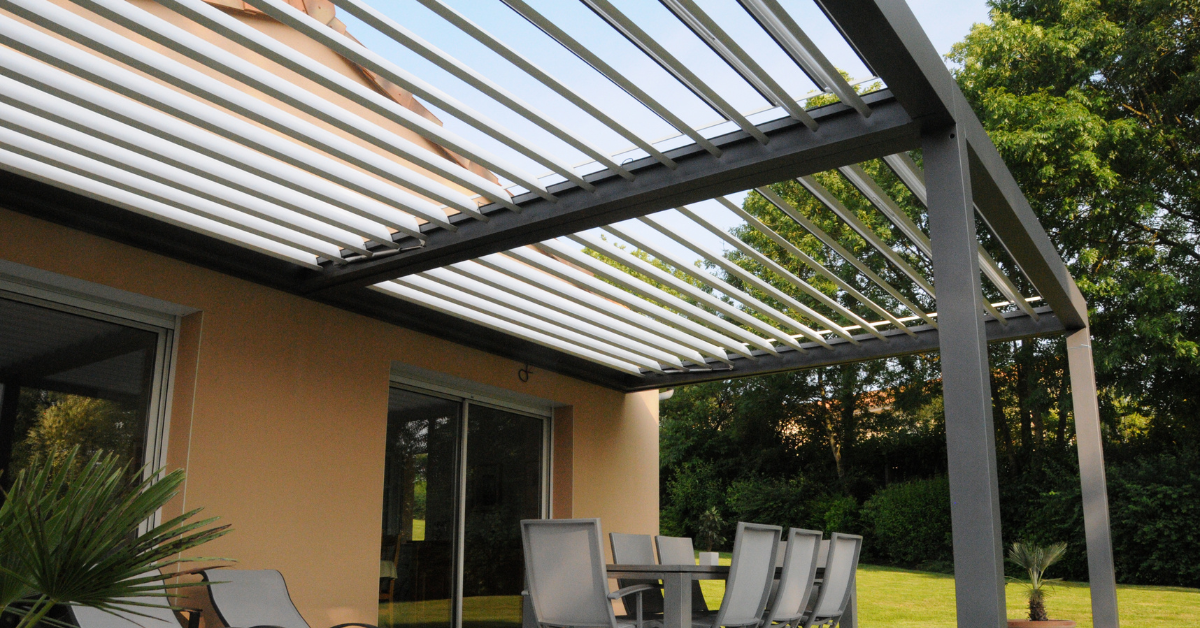
Many people choose a fixed roof to save money, only to realize that the living room under the patio has become as dark as a cave. The whole point of a bioclimatic pergola is that you control the light: let it in when you need it, block it out when you need to.
7. Forgetting about wind protection (side shades)
The sun rarely shines directly overhead. Without side shades (e.g., ZIP screens), the afternoon sun and drafts can ruin your relaxation. It’s worth choosing a structure that allows for these to be integrated later.
8. Ignoring permits and regulations
Although most pergolas do not require a permit, you must comply with building coverage limits and neighborhood regulations. Don’t find out from a demolition order that you’ve built beyond your property line!
9. Lack of Lighting and Power Sources
Running cables through an elegant aluminum profile after the fact is nearly impossible to do aesthetically. Plan ahead for LED lighting and outlets for your laptop or electric grill!
10. “I’ll put it together over the weekend”
A bioclimatic pergola is a precision structure. If the frame is even 1–2 millimeters out of alignment, the slats won’t close perfectly, and the structure will no longer be watertight. Professional installation isn’t a waste of money—it’s the key to your warranty.

